
Strength in Numbers
Recovering from cancer has left me a 158-pound weakling. But I'm stronger than ever in ways that matter most. Can we redefine our definition of strength to capture the power of community?

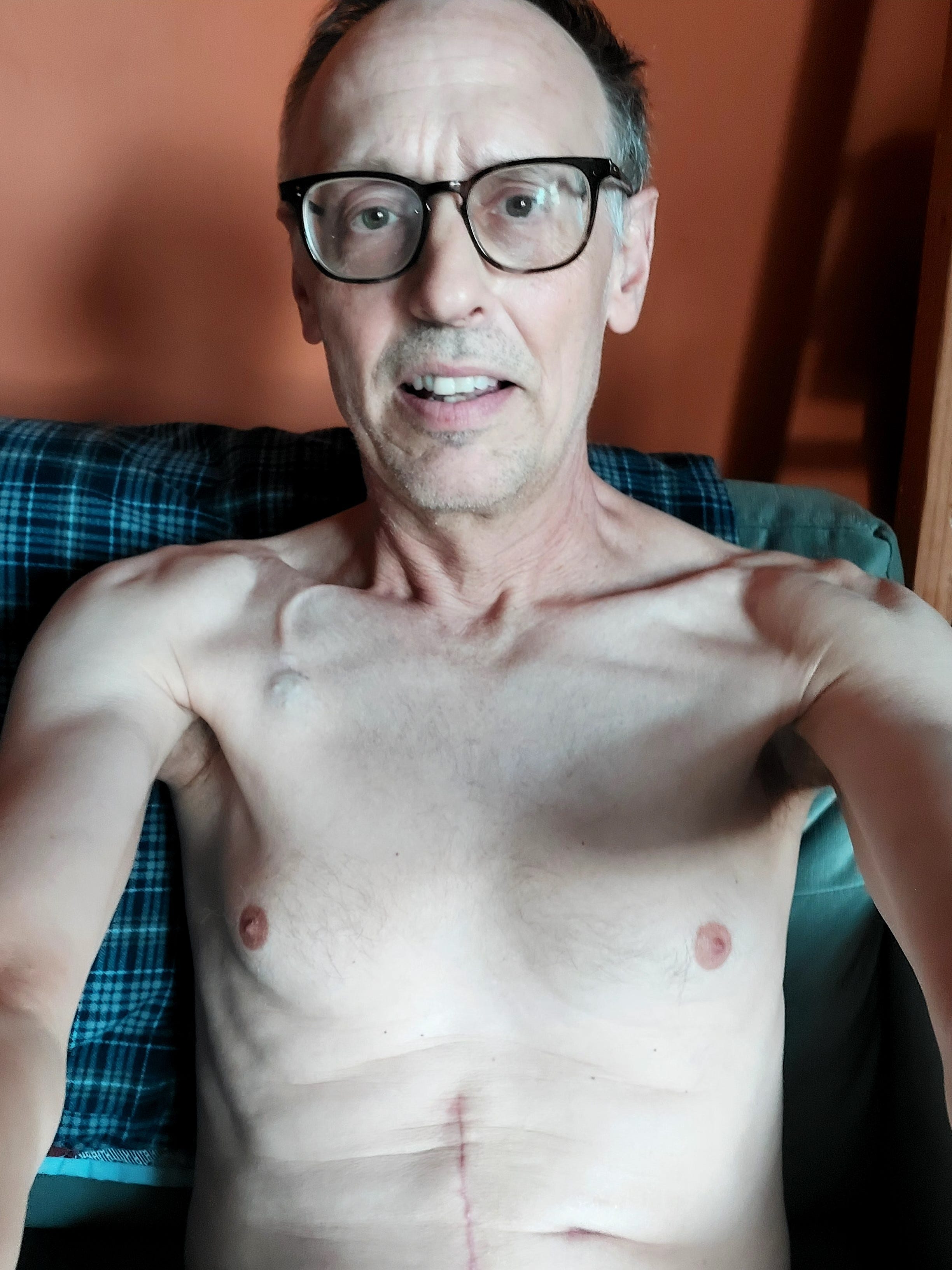
I’ve never been weaker. I’ve never been stronger.
You might be saying: Whatchu talkin’ ‘bout, Willis?
I’m talking about weakness in a purely physical sense. But strength in a holistic way.
I now weigh 158 pounds, having lost 32 pounds after a major belly surgery two months ago. Most of the lost weight came from my muscles, which turned into raw materials for healing my cut-up gut.
I’m back to the scrawny guy I was in 8th grade.
And yet I’m at the height of my powers. At least when you think about my abilities to influence people, to have my voice count, to find support for the things I want to do.
That has everything to do with the community I’ve cultivated–one that has only widened and deepened over the past year as I’ve shared my experience with cancer.
I’ve leaned into my interdependence with others during this time. I’ve been honest about my need for help–from doctors and other clinicians, from family, from friends.
Help in removing cancer. Help in handling the financial cost of not being able to work much. Help in getting through moments of pain, despair and darkness.
And that willingness to be “weak”—to acknowledge my vulnerabilities—has paradoxically magnified my might. Increased my potency.
My body may have gotten skinnier in recent weeks, but my posse is thick and getting thicker.
Clients of mine from before cancer have become more like friends. And they have reached out in recent weeks, saying they want to get back to work with me.
These include editorial clients, who look forward to more support from me in writing OpEds and tackling other writing and speaking projects.
Friends and colleagues in the ski industry also have reconnected, and I’ll be giving at least two talks at conferences in the months ahead. I pitched talking about my cancer journey, and what I’ve learned about the kind of masculinity needed for true healing.
They’ve said yes.
I’m excited that I’ll be giving workshops titled, “The Tough Guy Show Meets Cancer: Lessons on Guts, Leadership and Life from a Tough Year.” At both the Pacific Northwest Ski Areas Association’s Mountain Works event and the Rocky Mountain Lift Association annual gathering.
I also just got accepted to speak about the “Tough Guy Show” at SHRM 2026. That’s the country’s biggest HR conference.
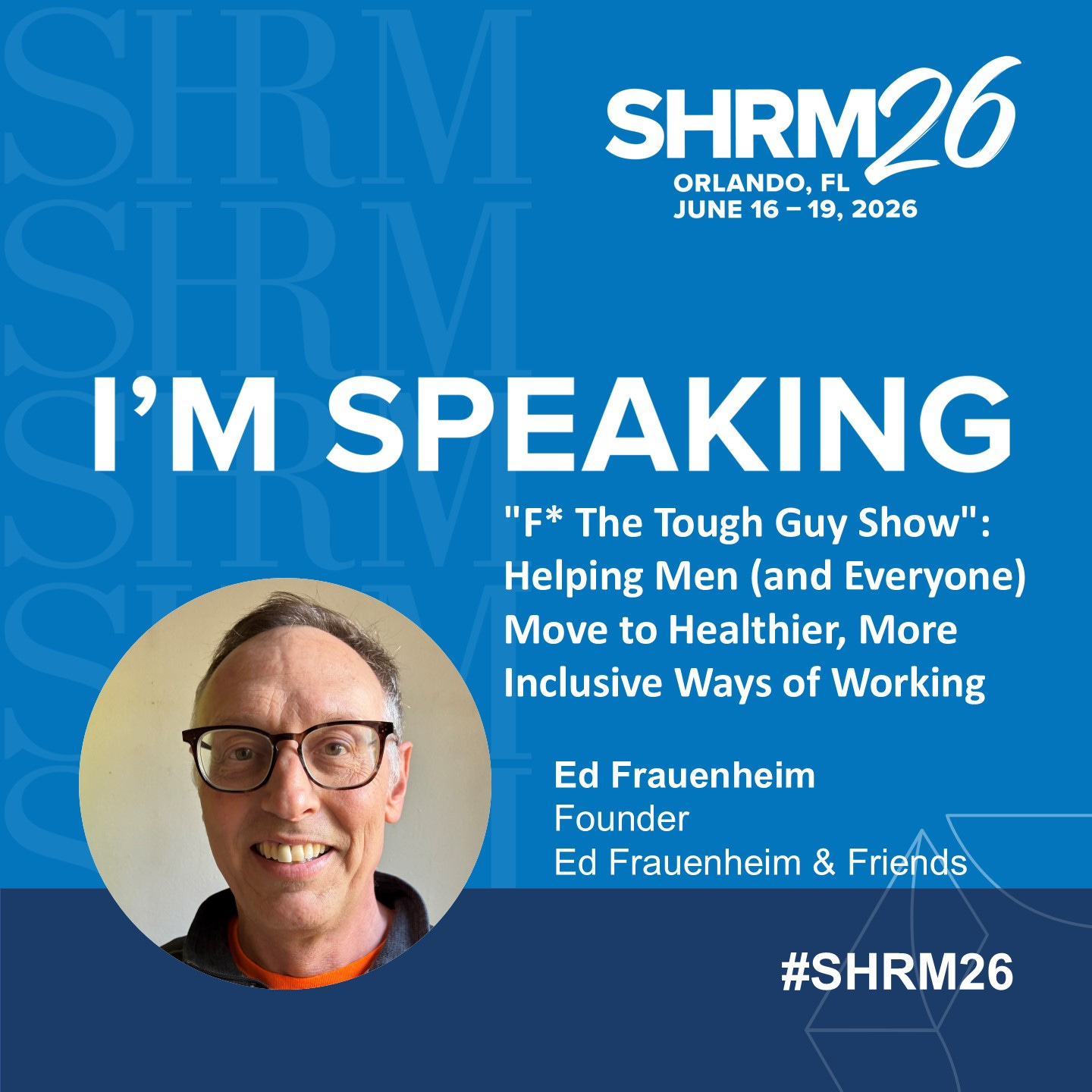
At all these events, I’ll be talking about the pressures on men, especially, to bottle up emotions, to go it alone, to best others. And how performing the Tough Guy Show hurts us as individuals and organizations.
Unfortunately, many of our country’s top leaders are stuck in a Tough Guy Show re-run. Pete Hegseth is more concerned about push-ups and lethality than he is about wise strategy, legality and decency.
Donald Trump launches military operations unilaterally. He claims, “we don’t need anybody” to help with the widening war he started with Iran.
But this go-it-alone bluster is clearly B.S. Trump, in fact, also asked–demanded even–that other nations help secure the critical Strait of Hormuz.
No man, no person, is completely independent. We need care from other people when we are born. When we get sick. When we grow old. Our work and our lives are shot through with dependencies on others. Remember how crucial delivery service folks were during the pandemic?
Like it or not, we are each others’.
That doesn’t mean we can constantly ask for or expect help, if we’re able to pull our weight. We can’t forever exist in a puddle of tears, as my friend Alan B. puts it.
I, for example, am working most days to get stronger with exercises and walks around my neighborhood.
But in general, we err on the side of fearing we’re a burden on others. We worry we’ll be shamed if we show up as anything less than a self-sufficient eager beaver.
For example, research has found that a majority of men keep a prostate cancer diagnosis secret when they can, due to factors including fear of being stigmatized or seen as a burden.
That secrecy, which typically means bottling up big feelings, often backfires.
“In the long term, holding emotions back without an outlet can lead to an increase in stress, anxiety, depression, [and] social isolation,” says Dr. Jesse R. Fann, medical director of psychiatry and psychology at the Fred Hutchinson Cancer Center in Seattle, and a professor at the University of Washington.
Greater social support has also been linked with improved outcomes for some cancers, according to the National Cancer Institute.
Improved cancer outcomes? That sounds exactly what any man would want.
Take it from me–a guy at one of his “weakest” moments. There is strength in numbers.
Speaking of numbers, I met you 26 years ago yesterday! Here’s to many more happy years. Not happy “in the infantile American sense of being made happy,” as James Baldwin wrote, “but in the tough and universal sense of quest and daring and growth.” All along, but especially over the past year, it has been more beautiful—happier—than I could ever imagine. Thank you, Team Ed, for buoying this partnership!
I love this. So happy to see your strength. I admire it and understand it’s a curvy road. I appreciate your navigation skills, and by the way, that’s a really cool Boat you’ve got, riding the waves.